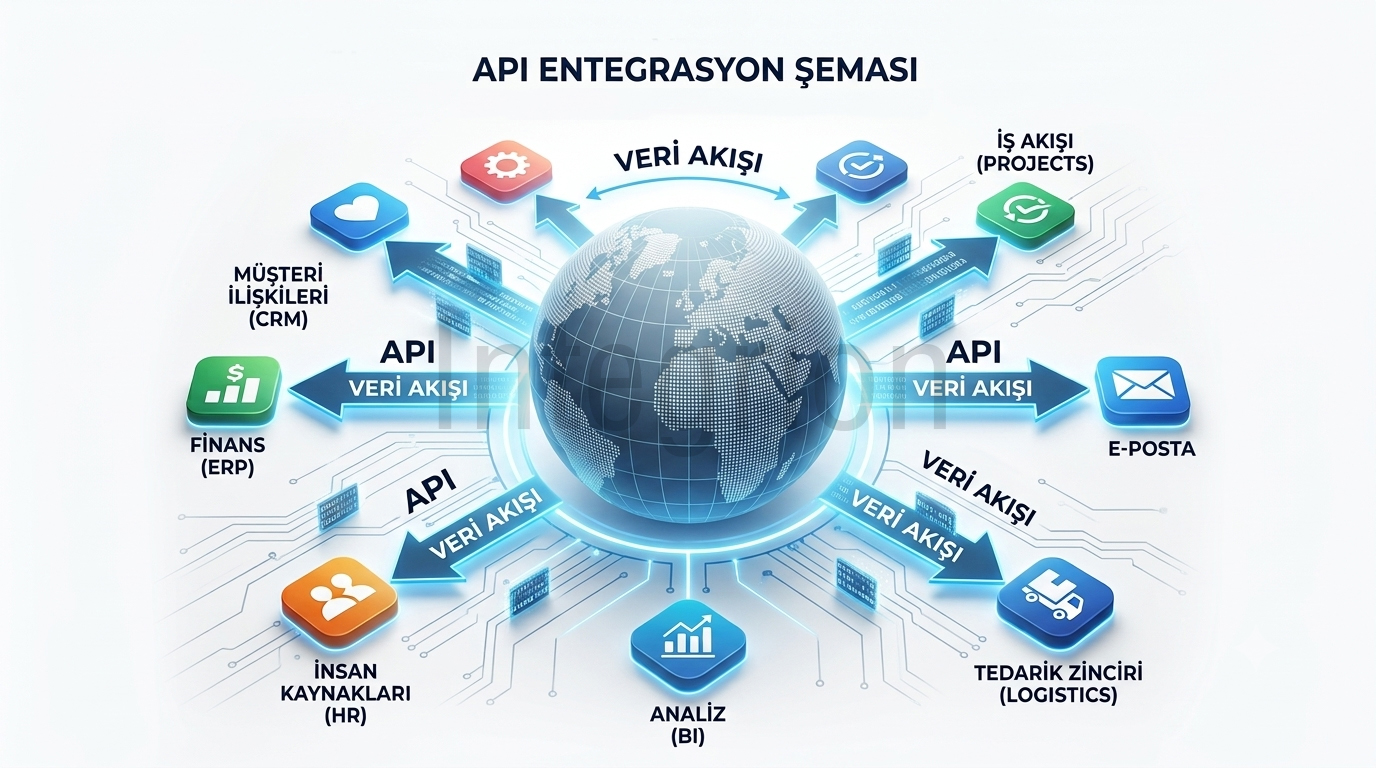

The average company runs dozens of software tools, and most of them don't talk to each other. We look at 'SaaS sprawl' and how to build an integration strategy.

There's a phenomenon in the industry called "SaaS sprawl": over time, without a central plan, a company accumulates dozens of different cloud software tools, department by department. Each tool solves a reasonable need on its own — but together, they turn into a stack of software that doesn't know about each other.
Sales picks its own CRM, marketing picks its own email tool, operations picks its own project management software, accounting picks its own invoicing system. Every decision is entirely reasonable at the moment it's made — it solves that team's need quickly and cheaply. But once these decisions pile up without central coordination, the same customer information starts living in four different systems, in four different forms.
The most concrete cost of unconnected tools is the same data being manually re-entered in multiple places — both a time sink and a source of errors. The second cost is sneakier: the same number (say, "this month's revenue") starts looking different across systems, because it's unclear which one is current. The third cost is invisible but the most expensive: since no single system shows the full picture, decisions get made on incomplete information.
Rather than starting an integration strategy with a big platform switch, it's more realistic to first take inventory: which tools are actually in use, which system is treated as the "source of truth" for which data, and which two systems generate the most manual data entry. Starting with the connection that creates the most friction delivers more benefit, faster, than starting with the flashiest integration.
Before growing your tech stack further, the question to ask isn't "which new tool should we add" — it's "how well do the tools we already have talk to each other."
Explore more of our articles on this topic.