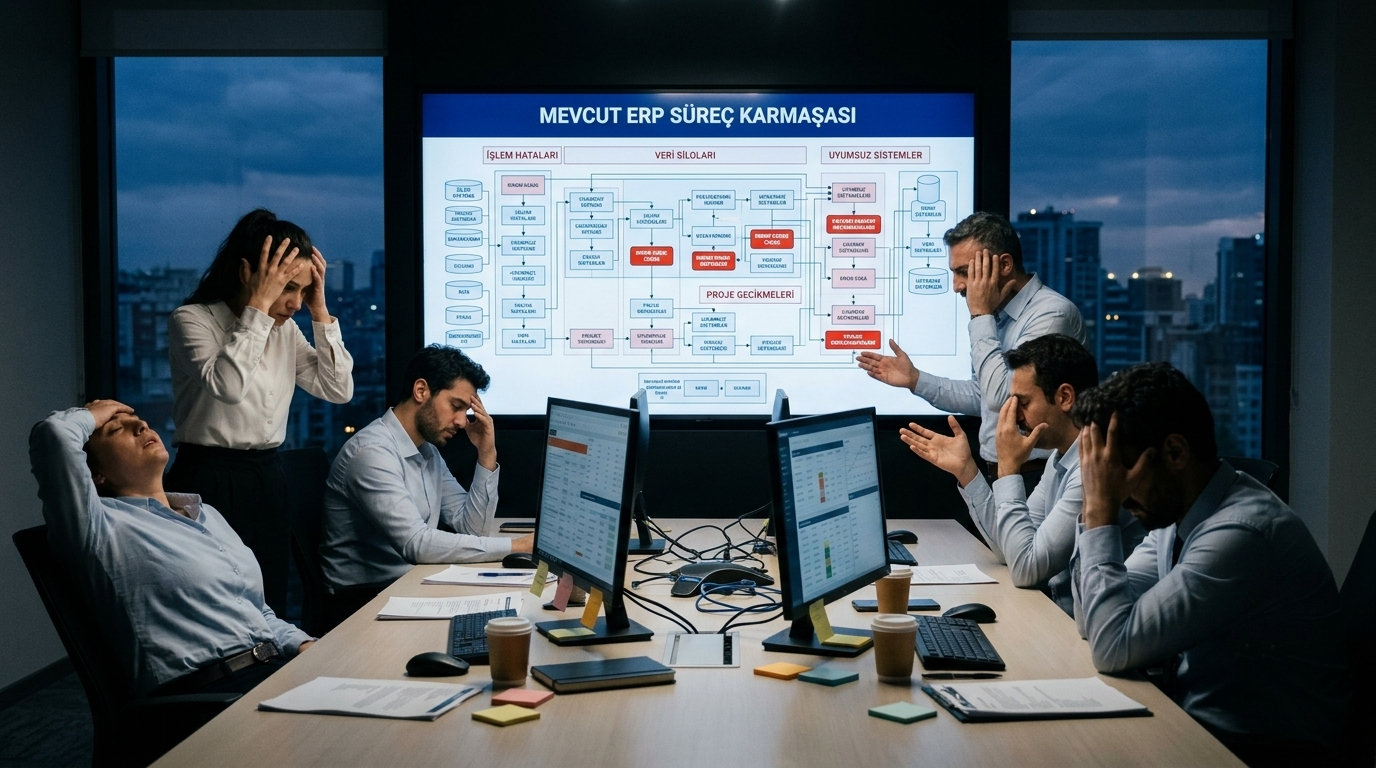

The term ERP was coined by Gartner in 1990. We look at the 'spaghetti integration' trap businesses fall into connecting ERP to other tools, and the alternative.

The acronym "ERP" was first used by research firm Gartner in 1990 — but the concept's roots go back much further, to Material Requirements Planning (MRP) systems in the late 1960s. The 1980s brought MRP II, which expanded beyond manufacturing planning to cover finance and HR; Gartner's ERP term was coined to describe that broader scope. The need to connect a business's ERP to its other tools is a problem that hasn't changed since.
Connecting an ERP directly to every new tool (e-commerce, CRM, a field app, a reporting tool) one by one seems tempting — but just like communication channels growing exponentially as a team scales, the number of connections grows exponentially too. In enterprise architecture, this is called "spaghetti integration": every system connects directly to many others, none of the connections are standardized, and replacing one system means rewriting everything connected to it.
The long-accepted solution in enterprise software architecture is to connect every system not to each other, but to a central middleware layer or integration hub — the "hub-and-spoke" pattern. Each system only talks to the hub; the hub translates the data into the right format and routes it to the right system. When a new system is added, you only need one connection to the hub, not one to every existing system.
Today, this centralized pattern is usually built on webhooks and REST APIs: when an event happens in one system (a new order, a paid invoice), it's forwarded in a standard format to the central point, which then distributes it to the relevant systems. This approach takes more upfront setup effort than direct connections, but significantly reduces maintenance cost as the number of systems grows.
The right question when building an ERP integration strategy isn't "how do I connect these two systems" — it's "what structure keeps this connection sustainable once I reach the fifth or tenth system."
Explore more of our articles on this topic.