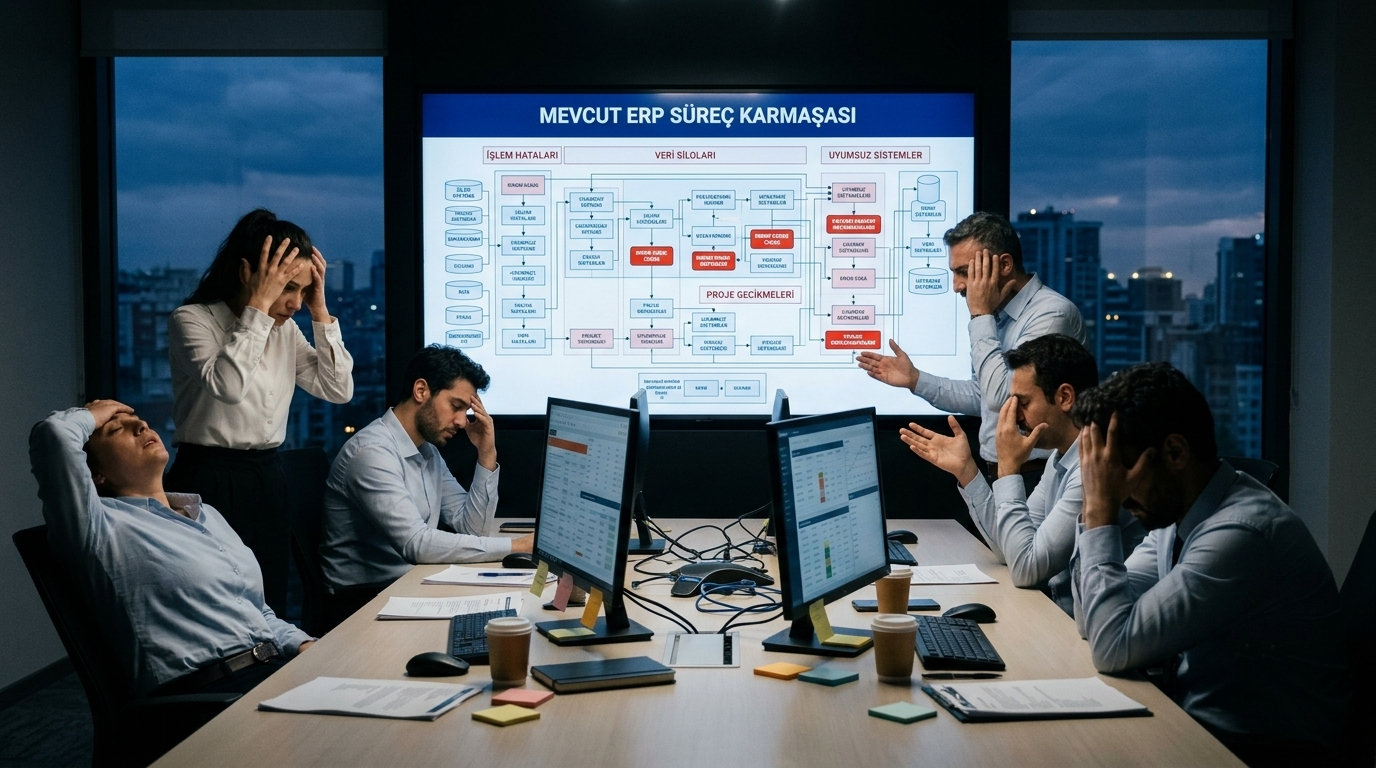

A business process isn't a procedure, and a procedure isn't a policy. We cover the basics of process mapping and why every process needs an owner.

"Process," "procedure," and "policy" get used interchangeably in everyday conversation, but in process management they represent distinct layers. Without clarifying that difference, a "process document" usually ends up being neither a process nor a procedure — just a vague pile of text.
A policy defines the rule and rationale behind a decision — "all purchases above 10,000₺ require two approvals," for example. A process is a sequence of activities carried out across multiple roles to produce an outcome — the end-to-end flow from a request being created to it being approved and purchased. A procedure is the most concrete level: step-by-step instructions for how to do a single step within the process — "click the X button on the approval screen." A process can change without the policy changing; a procedure can change without the process changing.
BPMN (Business Process Model and Notation) is an internationally recognized standard for visualizing processes using standard symbols and a "pool/swimlane" structure. The biggest benefit of mapping a process this way is that it surfaces problems that were invisible before: everyone suddenly sees that a request bounces unnecessarily between three departments, or that no one is actually clear on who owns a given approval.
One of the most fundamental principles in process management is that every process should have a "process owner" with end-to-end accountability — this person doesn't have to personally perform every step, but is responsible for whether the process as a whole works. Tools like the RACI matrix (Responsible, Accountable, Consulted, Informed) are used to distribute this accountability clearly.
The first step to improving processes in an organization usually isn't buying a new tool — it's making the existing process visible as it actually is, by separating the policy, process, and procedure layers.
Explore more of our articles on this topic.